Monday, August 28, 2017

Mihaly Munkacsy

(from "A Chronicle of Friendships, 1873-1900" by Will H. Low)

Mihály Munkácsy

No painter of foreign birth has in the past century received more honour at the hands of the French; successive medals in the Salon, a medal of honour at the Universal Exposition of 1878 and a grand prize at that of 1889, had been followed by the cross of Commander in the Legion of Honour in 1890. From the first, the dealers had fought for his pictures, and marriage had increased his wealth and social position.

"The Artist's Studio" by Mihaly Munckacsy
"Paris Salon, the Wife of the Artist" by Mihaly Munckacsy
"Woman Carrying Faggots" by Mihaly Munckacsy
Having known Mihály Munkácsy almost upon a footing of intimacy in my early sojourn at Barbizon, I had followed his career with interest. Fortune, artistic and material, had smiled upon him. He had a magnificent house with a studio that was one of the show places of Paris, and in every way he seemed marked as one of Fortune's favourites. Stories were told of visits to Budapest, the populace unharnessed the horses and drew his carriage through the streets in a burst of enthusiasm for their compatriot of world-wide fame.

The artistic appreciation of Munkacsy had hardly kept pace with his popular and material success, however, and artists and critics, once loud in his praise, had for a number of years looked coldly upon his work, and each successive Salon no longer marked a triumph at the time when, by chance, I met him one morning as I was on my way to my studio at Dubufe's.

Crossing the boulevard I saw that a tall stranger had dropped a portfolio, whence had escaped a number of drawings which he was now stooping to recover. As I came nearer and he rose before me, face to face, I recognized Munkacsy. I asked him if he remembered me. He looked at me intently with a puzzled air until I mentioned my name and that of Barbizon and then, true to his impetuous nature, he almost embraced me.

I gave him a brief account of myself and then told him that I was at work nearby on a ceiling for a new hotel in New York. "May I come and see ?" he asked. He tone seemed almost eager. "Now may I accompany you?" Of course I assented, very sincerely flattered, yet not a little puzzled by the strange insistence of his tone. We shortly reached the studio where my work was nearly completed. There was the most simple sincerity in his expression as he lavished his extravagant praise.

He returned again and again to dwell upon the clarity and lightness of tone of my work, and more than once he repeated, "Yes, I remember you were painting much lighter than the other men at Barbizon when you were there. It is evidently easy for you while I, I paint black. My work is heavy, it is the bitumen. Bitumen has been my ruin, everyone tells me so."

"And now you must come with me." Munkacsy's studio at Neuilly was, if possible, even larger than the one that I occupied, fitting with hangings of the most expensive nature, and the whole aspect was fairly palatial. A well-trained servant stepped forward to remove our coats, and drawing forward chairs, we seated ourselves.
Mihaly Munkacsy in His Studio
The work on which Munkacsy was engaged was a frieze for the Parliament house in his native country. It was about sixty feet in length by probably fifteen feet in height and stretched diagonally across the immense studio. Munkacsy began at once. "I have been ill, very ill, but I am determined to make this my best work, and above all to make it light in tone." Then calling two servants he directed them to set up the sketches for the work.

"The Hungarian Conquest" by Munkacsy
There were three and painted to quarter-scale, each fifteen feet long - formidable canvases in themselves. "There" he resumed eagerly, "that is the first sketch. It is like mahogany; and then I made the second one there. That is lighter, is it not? But it was not light enough, so I've made a third still lighter. And I hope that the big canvas may be yet lighter."


"I am reproached for my bituminous tones. Everyone is painting light for the Salon. Oh, much more than they used to do. No, I must paint light." Suddenly he broke out in a tone whose memory still haunts me, so dejected and hopeless it seemed to be, to come from one so favoured by fortune, so visibly surrounded by the evidence of his long-sustained success.

"You don't live in Paris. You have never known a Salon success. You are fortunate. It is pleasant, everyone praises you. It is "cher maitre" here, and "cher maitre" there, and year after year it goes on until it becomes a necessity of your existence. Then they begin to pick flaws. My Hungarian pictures bored them, so I gave them Parisians - and then they called my work upholstery and said that I was a creature of the dealers and incapable of affronting "la grande peinture."

Then I did my "Christ before Pilate," a real success with the public at least, and with the artists too, though some hung back. And then they began to reproach me with painting dark, and since then there has been no peace. It is like being thrown to the wild beasts. For what does it matter if the dealers clamour for my work, they, too, will stay away before the critics get through with me.

"Ecco Homo" by Munkacsy

Even now I hear whispers that my painting is only suited to Vienna or Budapest, and some day I may be obliged to retire there when Paris has sucked me dry. But you see I must paint light, or adieu to the Salon." His tone was so weird and unnatural that before he had ended I was convinced that his reason was unbalanced, any not many months after he was taken to a sanitarium."

Munkacsy's Last Years
"The damage to his nervous system from syphilis, which he had contracted in his youth worsened considerably. Because he felt so poorly, he had to leave early from the last great reception organized in his honour.  He spent a whole year in Baden-Baden, Germany, where his physicians continued to try the usual hydrotherapy treatments. However, he slowly fell into a state of dementia, and became upset by even the idea of creation. In January, 1897, he had to be transferred to the psychiatric clinic in Endenich, Germany.

Munkácsy died after a long illness and suffering in a state of unconsciousness on May 1, 1900. On May 6th, his body was delivered to Budapest where it laid in state in the Art Gallery. A cordon was set up around the building and the catafalque could be visited only with an admission ticket. The burial took place on May 9th in the Kerepesi Cemetery. The outstanding figure of the Hungarian and European painting, the painter prince, was accompanied by hundreds of thousand of people at this end of his life’s journey. The farewell speech was made by his fellow painter, Károly Telepy."


(These last two paragraphs are from an excellent site devoted to Munkacsy: http://munkacsyalapitvany.hu/en/the-life-and-work-of-mihaly-munkacsy )

(Also what Will Low did not know, or did not share in this account, was that Munkacsy had had an exceedingly difficult childhood as described in this very interesting article by Cathy Locke: https://musings-on-art.org/munkacsy-mihaly-munkacsy)

Sunday, July 16, 2017

Augustus Saint-Gaudens, "Coute que Coute"

Portrait of Augustus St. Gaudens, 1908 by Kenyon Cox

Augustus Saint-Gaudens and his assistants
in the interior of the Large Studio, 1905

Augustus Saint-Gaudens (1848-1907) was an American sculptor of the Beaux-Arts generation who most embodied the ideals of the "American Renaissance." Raised in New York City, he traveled to Europe for further training and artistic study, and then returned to New York, where he achieved major critical success for his monuments commemorating heroes of the American Civil War, many of which still stand.

General John Logan Memorial, Chicago

In "A Chronicle of Friendships," artist Will H. Low, who knew Saint-Gaudens from their time in Europe as art students and maintained the relationship upon their return to the States, shares the following insights into his character and method of working:

"In one incident of American sculptor Augustus Saint-Gaudens' determination to give to the world none but his best, coute que coute [at all costs], I happened to be involved. The model of Captain Robert Randall was finished in every detail, all that remained was to have it enlarged ready for the final touches of the artist. This was being done in a temporary studio, somewhere in the upper part of New York, though none of us had seen it.

We had heard much, however, of the impatience of the committee which had the erection of the statue in charge and who had given the sculptor little peace of mind in their pardonable desire to hasten the end of his labours.

Such was the situation when one day Saint-Gaudens asked me to go to an address where a key would be given me. With this key I was to enter a building where I would find the "Randall," now enlarged to its full size. I was to go alone and was to study the statue "for at least half an hour," or until I felt that I had seen it sufficiently. I soon found myself in a large, sky-lit shed, completely bare of all other objects other than the small model and the full-sized statue of Randall.

My first impression was distinctly unfavourable, and this pained me considerably, for I had greatly admired the smaller model. The more I studied it, the more I found it lacking in the spirit of the lesser figure, which was entirely by Saint-Gaudens' hand, while the enlarged statue was chiefly the work of an assistant. The loss of life and action, I finally decided was more than superficial. No deft working by Saint-Gaudens would regain for it the spirit which had been lost by his less-inspired assistant. 

I debated seriously what to do. Finally all my mind centered on one thought. what would Saint-Gaudens do if the case was reversed? In the case of artistic conscience, he would coute que coute, tell the truth. I met my friend and he divined my answers, soften them as I would. Finally in a tone of decision he said, "That settles it! I didn't tell you before, but I sent John La Farge and Stanford White in the same way. All three of you without consultation say the same thing and it simply confirms my own feeling. The figure must come down. 

How he parried the impatience of the committee I know not. He began another half-sized model which was far inferior to the first, rejected that, and had the first "pointed up" again. After his skillful retouching, the finished figure in the clay was cast in plaster, molded in bronze and erected on its pedestal and looks today from the shores of Staten Island - a characteristic work of a sculptor who always, coute que coute, gave of his best.


Captain Robert Randall, Staten Harbor

The Story of the Robert Louis Stevenson Bas-relief

Augustus Saint-Gaudens had become such a fan of Robert Louis Stevenson's writings that he said that he would consider it a privilege to model his portrait. But with his vigilant guardians there was a momentary hesitation, lest the fatigue of sitting for his portrait should be more than he should be subjected to. 

But the first sight of Saint-Gaudens destroyed whatever share of this hesitation Louis might have felt for the two men took to each other from the first.

"Astonishingly young, not a bit like an invalid, and a bully fellow," was Saint-Gaudens' answer to my query concerning his impression, as we came out together from their first meeting. "I like your sculptor, what a splendid straightforward and simple fellow he is, and handsome as well," was Stevenson's salutation when I came to him later in the day.

The sittings had been arranged at this first interview and, at Saint-Gaudens' request, I endeavoured to be always present when he worked, and thanks to our triangular flow of talk, I doubt if Louis ever felt for a moment the constraint of posing.

The sculptor's easel was drawn up near the bed where Stevenson was a prisoner. Never was dungeon more enlivened by talk, of which, as usual, it is difficult to give much idea, so constantly did subjects change, and so wide the gamut from serious consideration of serious topics to the lightest and wildest chaff.


Bas-relief of Robert Louis Stevenson by Augustus Saint-Gaudens
at the Metropolitan Museum of Art

The bas-relief rapidly took the form in which it was first conceived, a circular composition suggested probably by the lines of Stevenson's figure sitting propped by the pillows at his back, his knees raised; his usual position to read or write in bed.

The general composition was quickly indicated in masses, but the head along was finished at this time, the hands being completed the following year from casts which Saint-Gaudens made during Stevenson's stay at Manasquan. By that time the whole medallion was advanced nearly to completion, and in this circular form it appears to me much to be preferred to the oblong relief which, about fifteen years later, was placed in position at the Church of St. Giles in Edinburgh where many of the greater men of the country are commemorated.


The memorial may, however, be taken as merely an official variation of the original conception which fortunately remains; a copy of it built into my chimneypiece looks down on me in my studio, where, surrounded by an ivy-wreath as an emblem of friendship, the sculptor, with a decorative sense of the beauty of an inscription that was peculiarly his own, has modelled in relief on the background the entire poem with its frank acceptance of our common lot and its brave confession of abiding faith at the end: "Life is over, life was gay, We have come the primrose way. Life seemed held by but a slender thread for one of us in those days, but it was continuously gay by Stevenson's bedside as Saint-Gaudens' work grew apace." *

* from "A Chronicle of Friendships, 1873-1900" by Will H. Low

Sunday, June 4, 2017

Painting in Barbizon, France, in the 1870s

(from "A Chronicle of Friendships, 1873-1900" by Will H. Low)

"Of all the vocations of man, surely few afford greater joy to the practitioner than the work of the painter out-of-doors. The stillness of the morning and the spicy odours of the trees, welcomed the matinal painter, and a brisk walk, never so long as to induce fatigue, for there were abundant motifs near at hand, brought him to his work.
Self-Portrait by Will Hicok Low
The folding easel was soon in place, the canvas placed upon it, the clear and pure colours, squeezed from their tubes, duly arranged upon the palette, and work began.Often, if the painting ground was some distance from the inn, a lunch would be carried, and a second canvas for an afternoon effect would be ready, when, after the lunch disposed of and sundry cigarettes burned on the altar of the arts, the industrious painter resumed his task.

Canvases of large dimensions, too large to be carried to and fro, would be firmly fixed to upright stakes driven in the ground and, with the absorbent back of the canvas protected from the weather by oil cloth, would be left out of doors for weeks until the painting was completed.


No other protection was necessary. The painted surface of the canvas was practically impervious to rain, and the chance faggot gathers, the forest guards, or even errant children passing that way had, one and all, too hearty respect for the arts to inflict the slightest damage on a painting in progress, thus left at their mercy.

Andreescu at Barbizon, 1880
by Nicolae Grigorescu
Many a picture in the museums today, protected by frame and glass, and the temperature of the gallery where it hangs carefully regulated, was thus born gypsy-like in the woods, where the shafts of sunlight by day and the stars by night watched curiously the progress of its growth.

The quitting hour was a fitting crown to a day well spent. When the shadows grew long, when the sunlight in the distance, which had effectually baffled your brush for a tantalizing period, had finally faded, the time to buckle up your trips, strap your knapsack to your back, and turn your face homeward had come.


In the midsummer the golden light in the tree-tops sent you on your way through the cool shadow below as though your head were a halo, and it was yet day when, emerging from the forest, the point iron of the alpenstock to which the artist affixes his sketching umbrella rang on the stone pavement of Siron's courtyard, and vermouth and friendly criticism awaited you.


Later in the autumn, the evening settled chill, you stretched yourself a little stiffly as you ceased your work, glad at the prospect of the brisk walk. By the time your various paraphernalia of the artist were strapped together it was dusk, and holding your newly painted canvas gingerly from your person, your footsteps echoed loudly as you gained the highway through the woods. You walked in a Gothic cathedral, and a sense of solitude rose from the rhythmic beat of your feet.


The lights would be lit in the inn on your arrival, the painters, growing fewer in number as the season advanced, would be gathered in the high room, panelled with sketches, where we dined; where the table, already set, awaited, and a fire crackled on the hearth in the corner.

A Hotel/Restaurant in Barbizon, France

Here, by the light of a candle held close to your sketch, your work received the approbation or frank disapproval of your friends, each on his arrival running the gauntlet of criticism, and there ensued a discussion on art in general, accompanied by becoming personalities, until it was interrupted by the entrance of Siron, bearing high a huge and smoking soup tureen and crying, "A table, Messieurs, a table!"


We dearly loved the the general discussion of art in those days, when we frankly talked shop on all occasions - and some of us have not outgrown the habit.

Image may contain: 1 person, standing and outdoor
Some of the Young Art Students who went to paint in the
Barbizon Forest in 1877 - Including R.A.M. Stevenson of
the striped socks! These would have been folks WIll Low knew.


Wednesday, May 17, 2017

Twenty-Four Sittings with Tarbell

"Reverie" by Edmund Tarbell

Saturday, May 6, 2017

The Second Lesson of Carolus-Duran

Understanding Your Subject
There are two methods of understanding a subject. It may be treated heroically or intimately. In the latter case the artist enters into the life of the personages that he desires to represent, observing them as human beings; as it were, following them; taking account of their impressions, their joys, and their sufferings. The heroic manner, on the contrary, expresses but an instant of their life, when raised to an exceptional pitch. The personages represented are, as you might say, deified, so much do they seem to be absolved from the daily necessities of humanity. But, for this very reason, they lose many sympathetic charms that we only find in beings living, thinking, and suffering like ourselves. The latter alone can move us, because we find our own experiences in their melancholy, their terrors, their passions. The heroic method, necessarily restricted, is obliged to impose upon its personages a sort of conventional grandeur that suppresses the better part of their originality.

Duran's Point Illustrated by Tiepolo's Series of Etchings, "The Flight into Egypt"
In the subject that now occupies us, let us take our personages at their starting point and accompany them thorough the different episodes that must have marked their precipitate flight. You all know the legend. Joseph is warned in a dream that the time has come to quit Judea with the Virgin Mary and the Divine Child. Picture to yourselves the incidents of this departure. See the group precipitately leaving in the night; follow them hour by hour; imagine the scenes that must have followed one another, at the morning fires, in the glimmering twilight, in the moonlight, or under the bright light of day.


Tiepolo has made, in thought, this journey as I have indicated it to you; he has pictured these episodes; very many of them are most touching and very delicately felt. He has portrayed the solitude of a hamlet during the night; the holy travelers are crossing it hastily, not daring to trust themselves to any hospitality. Then, farther on, they arrive on the banks of a river that must be crossed. Angels push the boat, and, father on, the Virgin Mary is supported by them as they climb a steep ascent. *

You are not to imitate Tiepolo, nor to bear in mind his compositions; but you must proceed like him. It is the only way to avoid the commonplace — the only way to find charmingly intimate scenes; the child Jesus crying, smiling, or being nursed by his mother. The travelers have rested in the shade, as you might have done; they have had in their flight a crowd of emotions, such as you may have felt in your journeys. Call us your remembrances and apply them, so that the personages may be before your eyes, moving, walking, resting, forming a whole with the nature that surrounds them and of which they reflect the influence.

This sympathy that has made you live in thought with your subjects has shown them to you in varied circumstances, under the numerous effects of light, shade, or twilight. Choose one of these effects — that one of which you have kept the clearest and the most vivid remembrance. Your group must harmonize with the hour, solemn or cheerful, that you have chosen. As you are very different from one another, your compositions will reflect the variety of your natures.

This habit of living with your personages will have the effect of presenting them to your mind under a fixed form. Having followed and analyzed all their actions, all their sentiments, you will in the end know them as if they were real things. It will appear to be the remembrance of an actual scene.
Do not hurry to place this vision on canvas. Turn it over in your mind, that it may be refined and completed at every point of view. It is only when you have thus mentally elaborated your composition, that you should decide to execute it; for then you will have lived it.

Saturday, April 29, 2017

The First Lesson of Carolus-Duran

Lessons to My Pupils: First Lesson

Is Painting simply an imitative art? No; it is, above all, an art of expression. There is not one of the great masters of whom this is not true. Even the masters who were most absorbed by outward beauty, being influenced by it according to the sensitiveness of their natures, understood that they neither could not ought to reproduce anything but the spirit of nature either in form or color. Thus it happens that these masters have interpreted nature, and not given a literal translation. This interpretation is precisely what makes the personality of each of them. Without this individual point of view there can be no really original work.

This shows how dangerous are those schools that, restricting the artists to the same methods, do not permit them to develop their individual feeling. These schools, however, make use of a very respectable motto: “Tradition.” But what are we all but the result of tradition? — only we ought to be free to choose in the direction that agrees with our aspirations, and not have imposed upon those of another man, however great he may be.

In the French school, since Ingres, the tradition comes from Raphael. That was very well for Ingres, who freely chose the master from whom he really descended; but we who have other needs, who desire reality — less beautiful, without doubt, but more passionate, more living, more intimate, we should search a guide amongst the masters who responds most fully to our temperament.

Imagine the painters of the seventeenth century in Spain, Flanders, or Holland obliged to follow in the footsteps of Raphael instead of the inspiration of their individual genius! What would have become of their reproductions? Instead of Velasquez, Rembrandt, Rubens, Teniers, Ostade, and Brauwer, we should have a lot of would-be Raphaels, counterfeited, stunted, and grotesque, a commonplace and disheartening plagiarism substituted for their sincerely and extremely varied chefs-d’oeuvre.
 
The example that I have just given you in the past has a singular application at present, when the same causes are producing the same disastrous results. It is as absurd to attempt to impose on artists one and the same mold in which all — powerful or weak, impassioned or timid — must form their thought, as it would be to constrain them to modify their physical natures until all should resemble a given model. Art lives only by individual expression. Where would we be if the great masters of all times had only looked to the past — they who not only prepared, but made the future? 

Works of art can only be produced by the recalling of our aspirations and experiences. To live one’s work is the condition, the sine qua non, of its power and of its truth. 
 These principles apply not only to “compositions,” but also to the painting of portraits, which many wrongly believe to be another art, because the greater part of portrait painters have only represented the visible form of their subject. If we study the masters that are looked upon as first in this order, we shall see that they have not been contented with the material appearance, but that, putting themselves aside, they have sought the particular characteristics of the model — his mind and his temperament as well as his manner. To place all one’s models on the same background is like serving all kinds of fish with the same sauce.

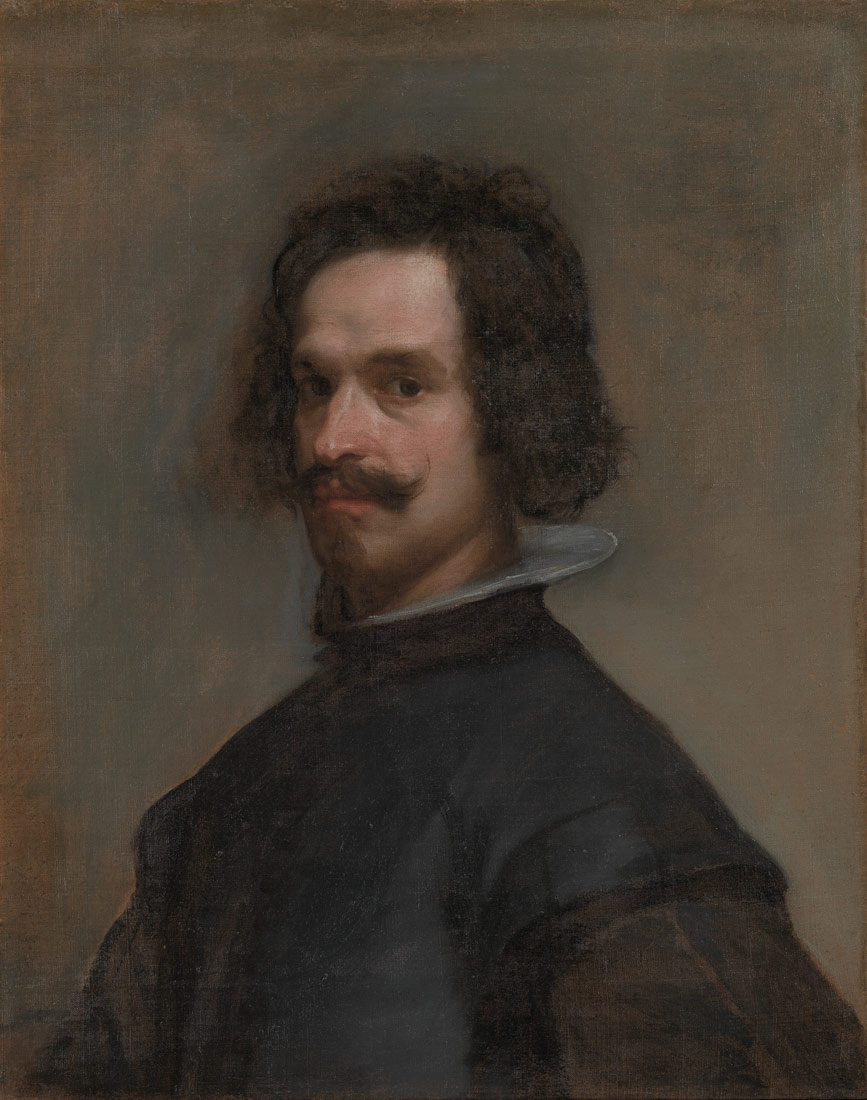
We will review some of those who, right or wrong, have come down to us as types: Holbein, Velasquez, Rembrandt, Titian, Raphael, Van Dyck. Which if these painters best agrees with the ideas I have just expressed? Among the persons painted by Holbein, Velasquez, and Rembrandt, there is not one that does not seem to be known to you intimately. You exclaim, in spite of yourself: “I feel as it I knew him — what a good likeness it must be! Each has his own individuality apart from the habits and plastic tendencies of the painter.

"Portrait of a Man" by Velazquez

"Charles de Solier, Sieur de Morette,"
by Holbein the Younger

Titian, in spite of his admirable works in this art, is a transition between these first and those less close in their portrayal of the individuality of their subjects.

"Portrait of a Man with a Quilted Sleeve" by Titian

Raphael, in his love for beauty and harmony, only heeded the model posing before him as far as it coincided with his ideal. In all his portraits we see Raphael; but it is impossible to disengage the precise individuality of the person portrayed.*

"Baldasarre Castiglione" by Raphael

In Van Dyck it is yet more noticeable. He has painted commoners and nobles, giving them all the same style, the same elegance, that sprang from his own taste and graceful personality.

"Martin Ryckaert" by Sir Anthony Van Dyck
This necessity of self-abnegation, indispensable to the portraitist, is the only thing that separates the portrait from composition. 

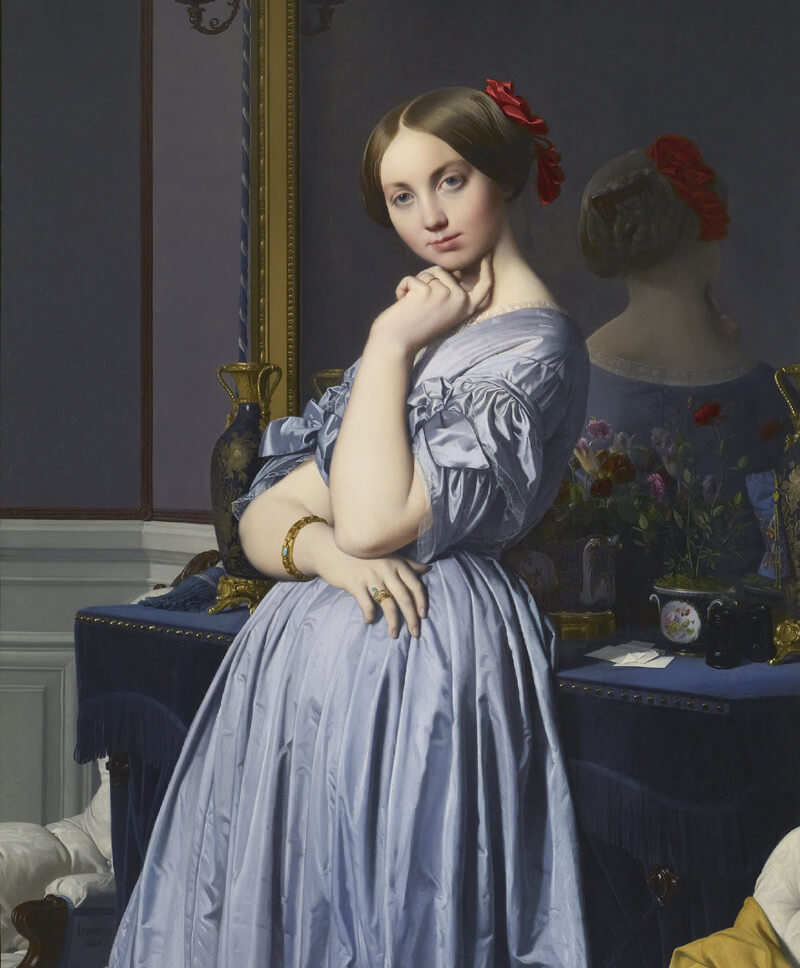
I will leave to Ingres, who did wonders in this direction, and to Delacroix, who really was unable to make a portrait, the task of saying to which of these two genres supremacy belongs — if supremacy there be. Ingres said that only the greatest masters had made true portraits. Delacroix wrote, with a sadness that one feels between the lines, that 
"Portraiture is the most difficult thing in art. I myself believe that each offers different but equivalent difficulties, the placing on view of one person being as complex as that of ten. In a picture you must draw all from your own soul, your remembrance of the phenomena of nature and your feeling toward nature, your past joys and griefs."
"Louise de Broglie, Countess d'Haussonville" by Ingres
*M. Duran, we think, will not find many to agree with him in so sweeping a condemnation of Raphael’s portraits. Editor.

Wednesday, April 19, 2017

In the Atelier of Carolus-Duran

(from Will H. Low's book "A Chronicle of Friendships, 1873-1900)

The Beginning
Carolus-Duran by his student, John Singer Sargent

From the enthusiasm of a youth from Boston, Robert C. Hinckley, now a successful portrait painter in Washington, the atelier Duran had its birth. Mr. Hinckley, arriving in Paris with the intention of studying art, had been greatly impressed by Duran's work and sought his instruction as a private pupil. M. Duran declined to admit a pupil into his private studio, but offered, if Hinckley would find a room nearby and work from life, to visit him and correct his work occasionally.

This he did, and before long a second applicant for the privilege of study was referred to Hinckley by the master, soon followed by others. When I joined the atelier there were eight or ten pupils, perhaps half being French, and in the years following the number rose to forty, the majority then being English or American.

The official language of the school remained French, however, a placard announcing a fine of ten centimes for each word of a foreign tongue.


A Radically Different Method of Instruction
Carolus-Duran in His Studio

The ordinary methods of instruction in art divide drawing from painting, and further subdivide drawing into drawing from the plaster cast and from life. The evident reason for thus attacking the problems of artistic production is not to confuse the student with form and colour at the same time.

The disadvantage of such a method lies in the danger in after work of continuing this subdivision and producing tinted drawings instead of the fully coloured, freely drawn products of the brush, which is the final instrument of the painter.

It is equally evident that by giving the neophyte the task of reproducing in colour and form the ever-changing living model his difficulties are multiplied manifold. But this is more or less unknown to the unpracticed beginner, and the charm of arriving at once at the point held in reserve during long years of study in other schools overbalances any feeling of timidity which he may have.

The struggles of one who cannot swim and who is thrown into deep water are nothing, however, compared with the floundering in colour and shapeless form which characterize the first studies according to this method.

Hence there were frequent departures from our ranks, and many a defeated painter found it expedient to become an humble darughtsman int he ahlls of anitque scupture of the Ecole des Beaux Arts.

The grave M. Bouguereau was quoted as asking one of our comrades, "Does M. Duran ever make you draw?" and Ingres's axiom that drawing is the probity of art was repeated to us on all occasions by students of rival ateliers solicitous of our welfare.

However, this method of study has its advantages. It keeps ever present in the student's mind the final end to be attained, and the incessant use of the brush, with its implied rendition of form and colour by masses and planes which exist before his eyes, rather than by the point and masses of black and white tones which are the necessary conventions of the usual method, gives him a mastery of his tools which is superior, and is absolutely logical.

Joined to a sincere and stimulating enthusiasm as a teacher, our master showed great perception and consideration for the individual temperament of his pupils; and I have known him to recommend diametrically opposite courses to different men, as he judged might be useful to one or the other.

Few of the ateliers of the time have turned out men of more renown today in the various branches of art.

Organization of the Atelier


The atelier was organized on a democratic basis, all students paying a certain amount each month, which went for the expenses of rent, heating, and the hire of models; our master giving gratuitously, in the service of art and in gratitude for similar gratuitous instruction received in his youth, his services two mornings of every week.

This was no light sacrifice of the time of a busy portrait painter, and later the service given was increased by visits to our own studios when we were preparing pictures for the Salon, when he was ever willing to counsel and help us.

The internal government of the studio was vested in our massier, one of our now well-known painters in New York occupying that monitory position, and ruling us with an energy on a par with our openly expressed disregard for all rule.

Our Models
The models were chosen by vote, and I can remember a long succession of these faithful servitors of art coming week after week, taking their positions on the platform for our judgment in the intervals of repose of the model from whom we were working.

We had a model of long experience who had posed for this or that picture or statue in the Louvre, who criticised our inexperience in posing a model or deplored our modern distaste for the conventional pose, "which was given me, Messieurs, by no less a person than Monsieur Ingres in 1856!"

We had Pere Gelon, the Pere Lambert (who, dying, left all his little fortune for the benefit of young painters entered in the competition for the Prix du Rome, in order that they might employ models as much as necessary), the brawny Schlumberger, and the Herculean Thullier, and others, whose names were familiar to all students at that time in Paris.

Many were the tales these veterans told of the great men they had served, and eager listeners were we, who strove to follow in their footsteps. But to them all, the precariously paid servants of a precarious trade, a figure painter would be ill inspired if he did not feel a sincere good fellowship and hearty gratitude.

Some of the older models, as I have said, were filled with the traditions of their glorious past, and I call to mind one of our comrades who, having made a study for an ambitious composition representing Alexander ordaining the burning of his palace at the termination of a feast, called upon Pere Gelon as the model for his principal figure.

But after a long and careful inspection of the composition sketch, Gelon nobly refused to take the pose therein indicated. "Not thus," quoth the Pere Gelon, "does a king ordain the burning of his palace, but in this manner," giving a pose inspired by the "Oath of the Horatii" by David.

"The Oath of Horatii" by David
And in no other way would he pose, and the submissive artist was forced to accept the hackneyed attitude; not at all to the advantage of his picture.

Paul Foinet, Supplier of Materials
Paul Foinet
Paul Foinet's Art Store on 94 Rue de Notre Dame, Paris
Another figure which rises from the memory of the old atelier is Paul Foinet, known as "Van Eyck," from his fancied physical resemblance to the early painter of that name. Paul was the colourman who every Monday morning appeared in the ante-room of the atelier with a supply of colours, brushes, and canvas of the required sizes, for our academic studies.

A Norman of the most indefatigable good nature, Paul, in the highest favour of us all, was then in the employ of another, but many of us have lived to see and rejoice in his establishment as a dealer on his own account. He would shoulder his heavy box of colours and trudge to the different studios of his clients, where, with a cheery word, not disdaining a bit of gossip, he was always welcome. Extending credit virtually unlimited, he and his wife  amassed a little fortune with few bad debts, though in many cases they have had to wait long for the settlement of an account.

I have known Madame Foinet to hire a studio, supply materials and pay for models for a young artist of talent, and many our our young girl compatriots have reason for gratitude to this kind woman, who has seen to getting fitting lodgings, and has counselled them wisely in their ignorance of custom, to say nothing of selling them honest colours on long credits. They number, not as clients merely, but as friends, many of the most eminent Fresh artists, and the writer feels justified in this digression to describe two of a class of Old World tradespeople for whose character and position we have no counterpart here.

Studio Shenanigans

Our revolutionary atelier was one of the quietest places of study in Paris. It is certain that work was unrelenting and no one was sufficiently proficient in his task to spare time for play.  But if a little riotous conduct found favour, one of my old comrades must remember that on one occasion after an attempt at modeling in clay in the Atelier Duran, there had remained a large sponge immersed in a bucket of clay-stained water.

One morning, as one of the men had gone into the ante-room for some purpose, my friend took this sponges and, seated on a high stool before the door, announced loudly his intention of "letting him have it" when he entered.

The door opened, and he flung the sponge. But it was not the comrade; it was our master, brave in the blue velvet coat and yellow silk shirt which he then affected. The aim was true, and for a horrid moment no one knew what was about to happen. Then the master withdrew, closing the door after him, and another time of suspense followed, no one speaking, and the unwilling culprit seeking his easel in sheer despair.

Then the door reopened, and the master, his disorder repaired by the aid of our friend who had remained in the anteroom appeared, and by a few sensible words brought the guilty to a stammering apology and an assurance that the unlucky sponge was intended for a fellow student.

Our master, upon occasion the very embodiment of high-strung pride, won our hearts that day by proceeding quietly with the lesson, and left us with an added measure of respect for him.

I remember keenly the helpful and frank criticism we gave each other, and I realize that in the common emulation and effort at the attainment of the same object lies the chief value of atelier work.

The criticisms of a master are of great value, but are necessarily general in character. The example of he, who by your side is doing perhaps a little better than you in rendering the task before you, constitutes the little step of progress which you can hope to make. Velasquez shines on a height far above you, unattainable, yet the first round of the ladder has been cleared by Sargent at your side - surely I may use my old comrade's name, even in his present eminence, in this connection - and you may follow.
John Singer Sargent (1880), Fellow Student with Will Low **

Many of our men, before a year after the atelier opened, had made such progress that our master's principles were vindicated, and though, in the four or five years where I was a more or less diligent student, I never made a study that seemed to me worth keeping. I have since realized how much I owe to my studies in the Atelier Duran.

The Annual Dinner
Soon after the first of the year the annual dinner which the atelier tendered our master took place. This year a number of the students of Duran had united to express their enthusiasm for the master by a poem which was sung in his presence at dinner.

Their general theme was the exaggerated comparison of our master to the great painters of the past. Italy had her Titian, Spain her Velasquez, while each verse ended with the antistrope "but France has Carolus-Duran!" The conviction with which three of our comrades lined up at the piano, where a fourth played the accompaniment, sang these laudatory couplets might have touched a heart of stone, but with some of us they merely stirred our sense of humour.

We, too had a song. Of this I can remember but one verse, though I think it had more.

Esquivant les lois de la construction;
Nous mettons dans nos fonds,
des couleurs tres frappantes;
Ne dessinant jamais, jamais nous ne finissons;
Pour nous la nature n'est qu'une tache,
Et Carolus-Duran!

Les eleves de Carolus-lus-lus-lus,
De Carolus-Duran, avec un D!

(translation)
Avoiding with intent the laws of construction;
In our backgrounds we use the most violent colour.
We never draw - much less do we finish;
For us nature is only a spot - and Carolus-Duran!

The pupils of Carolus-lus-lus-lus
Of Carolus-Duran, spelt with a D!

(Just a note about the last line of the song, "Of Carolus-Duran, spelt with a D". On the door which opened to the atelier was inscribed "L'Atelier des Eleves de Monsieur Carolus-Duran." Their was some mysterious student who found pleasure in adding a "d" to "Duran" which transformed it into a name which is as common as "Smith" is to us. This was done so regularly, and was something that Carolus-Duran would not have liked, that one of the massier's tasks was to erase it before the master's visit.)

After Years
There were men in Duran's who drew well and have since continued to do so, and despite the heresies of our youthful career in the estimation of academical Paris, few of the ateliers of the time have turned out men of more renown today in the various branches of art.

It was our privilege a few years ago, on the occasion of a visit to this country by M. Duran, to assemble in New York, without going farther afield than Boston, a round dozen of his former pupils at dinner at one of the clubs. Most of us were sufficiently mature, and more or less known, but we were all heartily glad to join in rendering honour to one whom whom we owed so much.

His pupils included John Singer Sargent, Ralph Wormeley Curtis, Kenyon Cox Theodore Robinson, Mariquita Jenny Moberly. Mariette Leslie Cotton, Maximilien Luce, James Carroll Beckwith, Will Hicok Low, Paul Helleu, Robert Alan Mowbray Stevenson and Ernest Ange Duez. Of his twenty-five most notable students, the majority were English or American.

*In the Studio of Carolus-Duran - an account of Duran's instruction in pdf form
** Thanks to the Smithsonian Archives of American Art for the use of this photo.